

Grabill, Indiana

Ready to Schedule Your Inspection?
Whether you're buying, selling, or maintaining a home, we're here to provide the thorough inspection and honest answers you deserve.

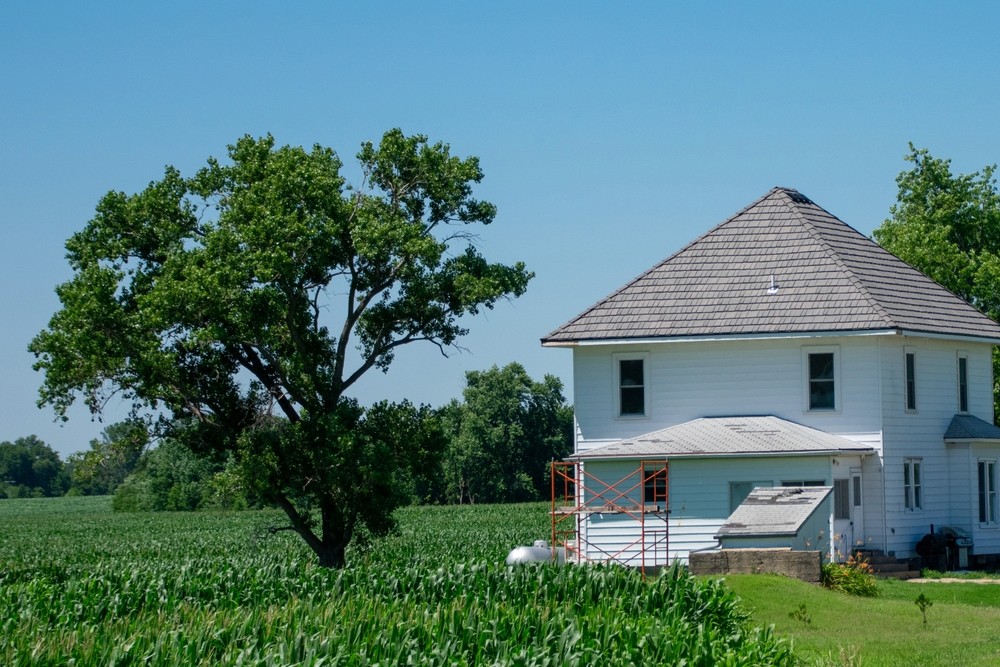
Grabill, Indiana Home Inspection Services
Grabill was platted in 1902 when the Wabash Railroad extended to that point, named for the first postmaster, and incorporated in 1912. Its population has been essentially unchanged for twenty years, which makes it an Edwardian village core surrounded by Cedar Creek Township farmland and the Old Order Amish settlement that has been here since 1853. Indiana Inspections inspects throughout Grabill and northeastern Allen County.
Every inspection comes with a photo-documented report written in plain language, which is particularly useful here because the buildings are not all standard.
What Grabill Homes Tend to Need
Buying in and around Grabill means dealing with two different kinds of property, and they need different things from an inspection.
Inside town, the housing is early 20th century and after, on municipal water and sewer. The town publishes its own water quality notices, including a lead action level notice posted in 2025, so if you are buying here it is worth asking the utility directly where things stand and what is recorded for the address. Otherwise the findings are what you would expect of houses from the 1900s to the 1950s: layered electrical upgrades, mixed supply piping, older roofs, and drainage that has changed as the ground settled.
Outside town, Cedar Creek Township is a different proposition. Properties out there are on private wells and septic systems, in a county where the soils are largely unsuited to on-site wastewater treatment, which is exactly why so many systems in Allen County have failed early. On a rural property, the age and condition of the septic system, the location and condition of the well, and the separation between the two belong at the top of your due diligence, and a water test is worth doing.
The Amish community around Grabill is large, has been here since the 1850s, and its economy runs heavily on construction and carpentry. Amish-built and Amish-remodeled homes are common in the surrounding township, and they can differ from standard construction in electrical service, heating fuel and appliances, water systems, and the permit history behind additions. That does not make them problem houses. It means the inspection has to look at what is actually there rather than assume the usual arrangement, and we do.
For most Grabill properties we recommend adding:
Radon testing on every home. Allen County is an EPA Radon Zone 1 county, the agency's highest category, meaning predicted average indoor levels above the 4 pCi/L action threshold.
An infrared inspection, which on older farmhouses and owner-built additions quickly shows insulation gaps, air leakage, and moisture behind finished surfaces.
A drone roof inspection on farmhouses and outbuildings, where roof area is large and steep and rarely gets looked at up close.
A sewer scope on in-town homes built before 1980, and on any property with a long lateral run to the main.
What's Included
Every Grabill inspection can be scoped to include:
Home Inspection, a full structural, electrical, plumbing, HVAC, and safety review
Sewer Scope, camera inspection of the main sewer line
Radon Testing, 48-hour continuous monitoring
Drone Roof Inspection, aerial roof documentation
Infrared Inspection, thermal imaging for hidden moisture and electrical hotspots
Mold Testing, air quality and moisture assessment
Not sure which add-ons fit your property?
Check our pricing, or read what to expect on inspection day.
Grabill Home Inspection FAQ
Is radon testing necessary in Grabill?
Yes. Allen County is EPA Radon Zone 1, the agency's highest-risk classification. A 48-hour continuous test on the specific property is the only way to know its actual level.
Do you inspect Amish-built homes?
Yes, and we approach them on their own terms. These houses may be set up differently from standard construction in how they are powered, heated, and plumbed, and additions are often owner-built with limited permit history. We document what is present, note anything that presents a safety concern, and give you a clear picture rather than a checklist that assumes a house it is not.
What should I check on a rural property outside town?
Well and septic, first. Allen County soils are largely poor for on-site wastewater systems and early failures are common, so the age of the system, the condition of the absorption field, and when it was last serviced all matter. We also recommend a water test on the well, and a look at the separation distance between well and field.
How long does a Grabill home inspection take?
Two to four hours on site for most single-family homes, longer for farm properties with outbuildings. Your report follows, typically within 24 hours. See Your Report for a sample.
Do you cover the rest of the area?
Yes. We inspect throughout Allen County and the region, including Leo-Cedarville, New Haven, Huntertown, and Fort Wayne.
Ready to schedule your Grabill home inspection?
Schedule Inspection or call (317) 721-3382.
