

Huntington, Indiana

Ready to Schedule Your Inspection?
Whether you're buying, selling, or maintaining a home, we're here to provide the thorough inspection and honest answers you deserve.

Huntington, Indiana Home Inspection Services
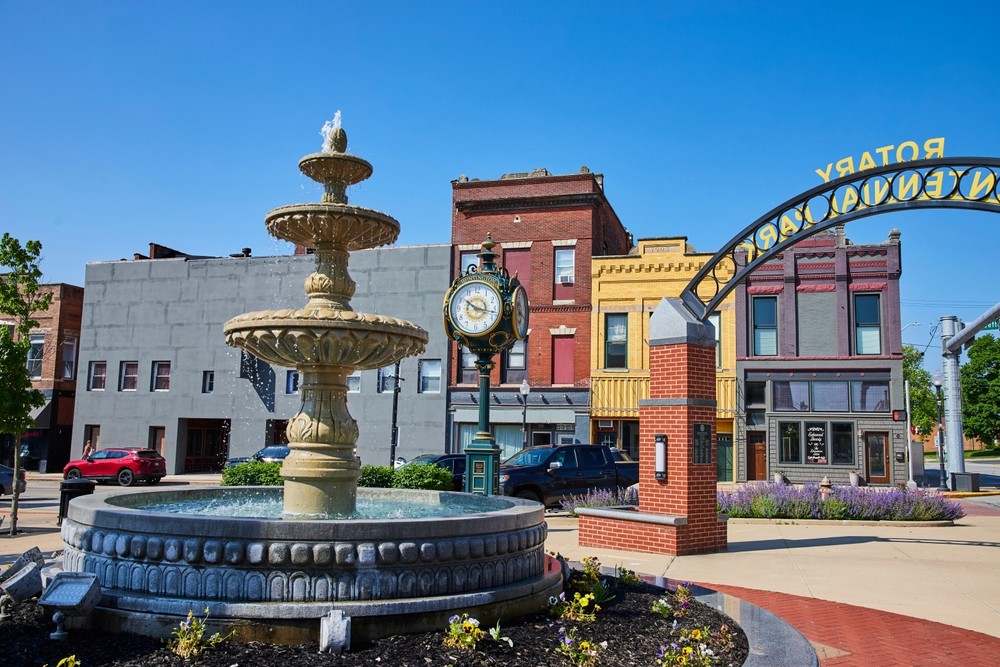
Huntington has six National Register historic districts, which is remarkable for a city of 17,000 and tells you everything about the age of the housing. The Wabash and Erie Canal came through the county in 1834, and by 1849 the settlement already had 150 houses. What followed is layered and well documented: the Courthouse Square district running from about 1845 to 1942, North Jefferson Street with roughly 700 contributing properties from the 1860s through the 1890s, Drover Town from 1857, the Old Plat from 1860 to 1920, and Hawley Heights from 1914 to 1954. Indiana Inspections inspects throughout Huntington and Huntington County.
Every inspection comes with a photo-documented report written in plain language, which matters here, because these houses generate long reports.
What Huntington Homes Tend to Need
Start with the sewer, because Huntington's is a genuine combined system. The city's long-term control plan covers roughly 5,600 acres with fourteen overflow outfalls, discharging to the Little River, Flint Creek, and the Wabash. About 4,400 acres have already been separated, six of nine planned projects are complete, and the remaining work includes a large interceptor through downtown with street reconstruction along Hitzfield, Lafontaine, Market, and Tipton.
What that means for a buyer is straightforward. In the parts of the city still on combined sewer, storm water and sanitary waste share a pipe, and heavy rain can push the system past capacity. We look for downspouts and sump discharge tied into the sanitary line, whether a backwater valve is present, evidence of past backup at the floor drain, and how any finished basement space was built relative to that risk. In the separated areas the risk profile is different, so it is worth asking the city which category the address falls into.
Then the age. Four of the six districts are predominantly pre-1930. Houses in that range routinely still hold original wiring, sometimes energized, behind newer circuits. Cast iron waste stacks are at or past the end of their service lives. Clay laterals sit under a century of tree roots. Supply piping changes material wherever a repair stopped. Roofs are steep and complex, with dormers and valleys that are where the leaks start. Hawley Heights is a different animal again, a coherent 1914 to 1954 pocket that includes homes built from Architects' Small House Service plans, which are compact, well proportioned, and now roughly a century old.
Huntington also has real water around it: the Wabash River, the Little River, Flint Creek, and the Forks of the Wabash, with J. Edward Roush Lake and its 1968 flood control dam immediately southeast. Lower-lying property deserves a flood zone determination as a matter of routine.
For most Huntington properties we recommend adding:
A sewer scope on essentially any older home here. Between the pre-1930 housing and the combined sewer system, this is the add-on that most often changes a negotiation.
Radon testing on every home. Huntington County is an EPA Radon Zone 1 county, the agency's highest category, meaning predicted average indoor levels above the 4 pCi/L action threshold.
A drone roof inspection on the Victorians, which have steep pitches, towers, dormers, and slate or slate-substitute roofing that nobody should be walking on.
An infrared inspection on any finished basement or any house that has recently been renovated for sale, where thermal imaging finds the moisture history that fresh drywall covers.
What's Included
Every Huntington inspection can be scoped to include:
Home Inspection, a full structural, electrical, plumbing, HVAC, and safety review
Sewer Scope, camera inspection of the main sewer line
Radon Testing, 48-hour continuous monitoring
Drone Roof Inspection, aerial roof documentation
Infrared Inspection, thermal imaging for hidden moisture and electrical hotspots
Mold Testing, air quality and moisture assessment
Not sure which add-ons fit your property?
Check our pricing, or read what to expect on inspection day.
Huntington Home Inspection FAQ
Is my house on combined or separated sewer?
It depends on the address. Huntington has been separating sewers for years and roughly 4,400 of 5,600 acres are done, with the remaining work concentrated downtown. The city can tell you which system serves a given property. Either way, we check how the home's storm water is handled and whether a backwater valve protects the basement.
Is radon testing necessary in Huntington?
Yes. Huntington County is EPA Radon Zone 1, the highest-risk classification the EPA assigns. A 48-hour continuous test on the specific home is the only way to know its level.
These houses are 100 to 150 years old. What should I expect to find?
Electrical and drainage lead the list, followed by roofing. Expect original wiring somewhere in the walls, a panel that was upgraded without upgrading what it feeds, cast iron waste lines near the end of their lives, and grading that has settled toward the foundation. None of it is disqualifying. All of it is worth pricing before you close, which is what the report is for.
How long does a Huntington home inspection take?
Two to four hours on site for most single-family homes, and longer for the large Victorians in the North Jefferson Street and Drover Town districts. Your report follows, typically within 24 hours. See Your Report for a sample.
Do you cover the rest of Huntington County?
Yes. We inspect throughout the county and the surrounding region, including Roanoke, Markle, Bluffton, and Wabash, along with rural properties on private well and septic.
Ready to schedule your Huntington home inspection?
Schedule Inspection or call (317) 721-3382.
