

LaGrange, Indiana

Ready to Schedule Your Inspection?
Whether you're buying, selling, or maintaining a home, we're here to provide the thorough inspection and honest answers you deserve.

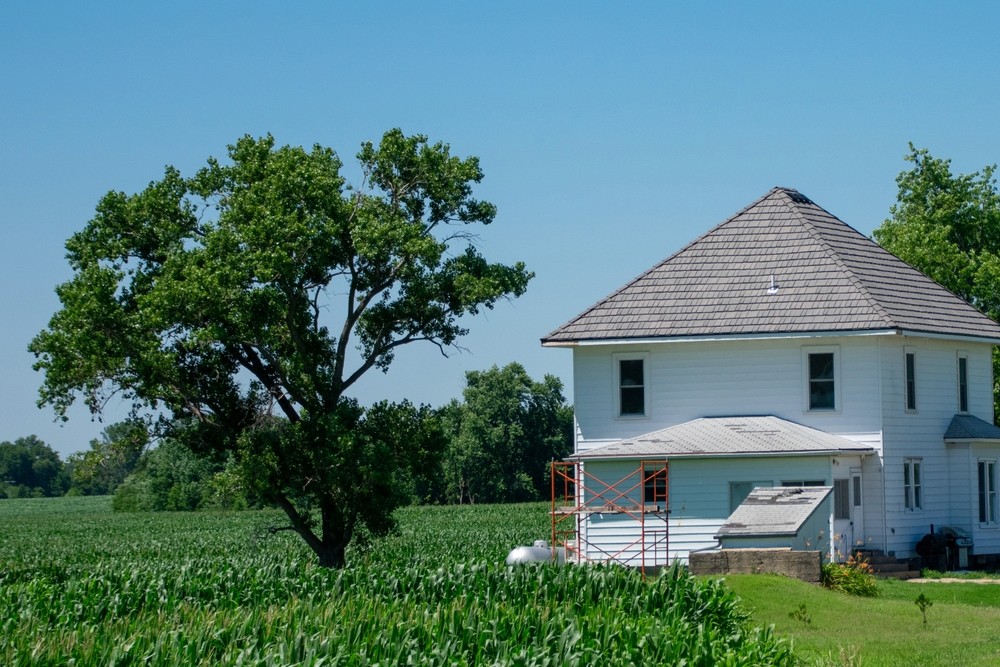
LaGrange, Indiana Home Inspection Services
LaGrange was laid out in 1836 and has been the county seat ever since, with an 1878 courthouse designed by a Fort Wayne firm sitting in the middle of it. Across LaGrange County, roughly a quarter of the housing predates 1950 and about two thirds predates 1990, so most of what changes hands here is genuinely old. Indiana Inspections inspects throughout LaGrange and LaGrange County.
Every inspection comes with a photo-documented report written in plain language, so you can price the work rather than guess at it.
What LaGrange Homes Tend to Need
The most consequential thing about buying property in LaGrange County has nothing to do with the buildings. It is the water table. Countywide, the average depth to groundwater is roughly 14 and a half feet, and in places it sits closer to 11. The whole county lies over unconfined sand and gravel aquifers, which is why so much of it is rated at high risk for drinking water contamination.
A shallow water table drives a long list of practical problems. Basements take on water at the wall-floor joint rather than through a single crack. Crawlspaces stay humid year round and grow the conditions for mold and wood decay. Sump pumps are not optional equipment here, they are a system the house depends on, which means the pump's age, the backup arrangement, and where the discharge actually goes all matter. And on any property with a septic system, the separation between the absorption field and the water table is the whole ballgame. The county requires a soil boring report from a registered soil scientist before it will permit a system, which tells you how variable the ground is.
On wastewater generally, LaGrange County runs what is described as the first countywide sewer district in Indiana, and it has replaced more than 4,000 septic systems, mostly around the lakes. Some areas have mandatory connection deadlines. If you are buying anywhere outside the town's collection system, find out which district area the property is in and whether a connection requirement is coming.
The town's own drinking water plant is around 60 years old and slated for replacement with a new facility and an additional well, so water quality complaints in older parts of town have a context.
For most LaGrange properties we recommend adding:
Radon testing on every home. LaGrange County is an EPA Radon Zone 1 county, the agency's highest category, meaning predicted average indoor levels above the 4 pCi/L action threshold.
An infrared inspection, which given the shallow water table is the fastest way to find moisture in a foundation wall, a crawlspace, or behind a finished basement surface.
Mold testing on any home with a damp crawlspace or a history of basement water, which in this county is a large share of them.
A sewer scope on in-town properties built before 1980, where laterals are the original clay or cast iron.
What's Included
Every LaGrange inspection can be scoped to include:
Home Inspection, a full structural, electrical, plumbing, HVAC, and safety review
Sewer Scope, camera inspection of the main sewer line
Radon Testing, 48-hour continuous monitoring
Drone Roof Inspection, aerial roof documentation
Infrared Inspection, thermal imaging for hidden moisture and electrical hotspots
Mold Testing, air quality and moisture assessment
Not sure which add-ons fit your property?
Check our pricing, or read what to expect on inspection day.
LaGrange Home Inspection FAQ
Why does the water table matter so much here?
Because it is close to the surface. Countywide the groundwater sits around 14 feet down on average and shallower in places, which puts it within reach of basement floors and crawlspaces during wet seasons. That shows up as seepage, humidity, efflorescence on foundation walls, and a hard-working sump pump. We look at all of it, and an infrared scan usually finds the problem areas faster than a visual pass.
Is radon testing necessary in LaGrange?
Yes. LaGrange County is EPA Radon Zone 1, the agency's highest-risk classification. A 48-hour continuous test on the specific property is the only way to know its actual level.
What should I check on a rural property with a septic system?
The age of the system, when it was last pumped, whether the absorption field shows surface wetness or odor, and whether the property falls in an area the county sewer district plans to serve. Given the shallow groundwater here, an aging field is a real risk rather than a paperwork issue. We also recommend a water test on any private well.
How long does a LaGrange home inspection take?
Two to four hours on site for most single-family homes, depending on size and add-ons. Your report follows, typically within 24 hours. See Your Report for a sample of what is included.
Do you cover the rest of LaGrange County?
Yes, including the Amish country in the western county. We inspect throughout the area, including Topeka, Shipshewana, Ligonier, and Kendallville.
Ready to schedule your LaGrange home inspection?
Schedule Inspection or call (317) 721-3382.
