

Topeka, Indiana

Ready to Schedule Your Inspection?
Whether you're buying, selling, or maintaining a home, we're here to provide the thorough inspection and honest answers you deserve.

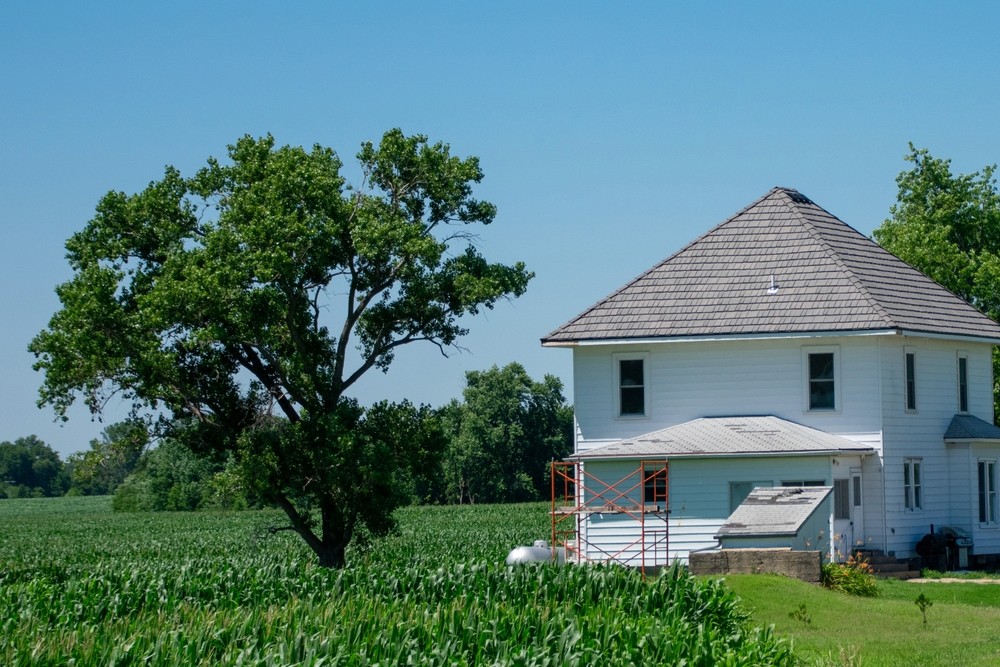
Topeka, Indiana Home Inspection Services
Topeka sits in the middle of the Elkhart and LaGrange Amish settlement, the third largest in the United States, with more than 200 church districts and something close to 29,000 people. Roughly 44 percent of LaGrange County's population is Amish. That shapes the housing here in ways a standard inspection checklist does not anticipate, and it is the reason we approach Topeka differently. Indiana Inspections inspects throughout Topeka and LaGrange County.
Every inspection comes with a photo-documented report written in plain language, describing what is actually in the building rather than what the form expects to find.
What Topeka Homes Tend to Need
Start with the water, because Topeka's is unusually hard and unusually high in iron. The town's own reporting puts raw hardness in the range of 320 to 440 milligrams per liter, which is roughly 19 to 26 grains per gallon, with iron between 1.5 and 1.9 milligrams per liter. The treatment plant aerates and filters to remove iron and manganese before the water reaches the system, but on the household side that chemistry still shows up as scale in water heaters and valves, staining at fixtures, and shortened life on dishwashers and ice makers. On every inspection here we look at the water heater's age and condition, whether a softener is present and functioning, and whether visible scale or staining suggests equipment has been running unprotected.
Second, the sewer. Topeka's collection system is separate sanitary by design, so this is not a combined-sewer town. But the system is a mix of PVC and clay pipe with seven lift stations, and the town's own engineering work documents significant inflow and infiltration: during rain events, flows rise well above the plant's design capacity. Inflow and infiltration mostly originate on private property, from cracked or offset laterals and from sump pumps and downspouts connected to the sanitary line. A sewer scope answers the first question and a walk around the outside answers the second.
Third, the buildings themselves. Amish-built and Amish-occupied homes in and around Topeka are frequently not connected to the electrical grid, and they may use propane or wood for heat, cooking, and hot water, with lighting and appliances to match. Additions are often owner-built over time. None of that is a defect. It does mean that an inspection has to evaluate what is present on its own terms, including fuel-fired appliance venting, clearances, and combustion safety, rather than looking for a standard service panel and calling anything else a problem.
For most Topeka properties we recommend adding:
A sewer scope on any home connected to the town system, given the documented clay pipe and infiltration issues.
Radon testing on every home. LaGrange County is an EPA Radon Zone 1 county, the agency's highest category, meaning predicted average indoor levels above the 4 pCi/L action threshold.
An infrared inspection, which on owner-built additions and older farmhouses shows insulation gaps and moisture faster than anything else.
A drone roof inspection on farmhouses and outbuildings, where roof area is large, steep, and rarely inspected up close.
What's Included
Every Topeka inspection can be scoped to include:
Home Inspection, a full structural, electrical, plumbing, HVAC, and safety review
Sewer Scope, camera inspection of the main sewer line
Radon Testing, 48-hour continuous monitoring
Drone Roof Inspection, aerial roof documentation
Infrared Inspection, thermal imaging for hidden moisture and electrical hotspots
Mold Testing, air quality and moisture assessment
Not sure which add-ons fit your property?
Check our pricing, or read what to expect on inspection day.
Topeka Home Inspection FAQ
Do you inspect homes that are not on grid electricity?
Yes, regularly. Many homes in and around Topeka run on propane or wood rather than grid power, and we inspect them on their own terms. That means checking fuel-fired appliance venting and clearances, combustion safety, water heating, and any wiring or generator systems that are present, and documenting the actual configuration rather than flagging it as a deficiency for not matching a standard house.
Does the hard water here matter?
It shows up in the equipment. At roughly 19 to 26 grains per gallon of raw hardness, plus iron high enough that the town treats specifically for it, scale and staining are ordinary here. We check the water heater's age and condition, whether a softener is installed and working, and whether the fixtures show the damage that comes from running unsoftened water for years.
Is radon testing necessary in Topeka?
Yes. LaGrange County is EPA Radon Zone 1, the agency's highest-risk classification. A 48-hour continuous test on the specific property is the only way to know its level.
How long does a Topeka home inspection take?
Two to four hours on site for most homes, longer for farm properties with outbuildings or for houses with unusual mechanical systems that take time to document properly. Your report follows, typically within 24 hours. See Your Report for a sample.
Do you cover the rest of LaGrange County?
Yes. We inspect throughout the county and the surrounding region, including Shipshewana, LaGrange, Ligonier, and Syracuse, including rural properties on private well and septic.
Ready to schedule your Topeka home inspection?
Schedule Inspection or call (317) 721-3382.
